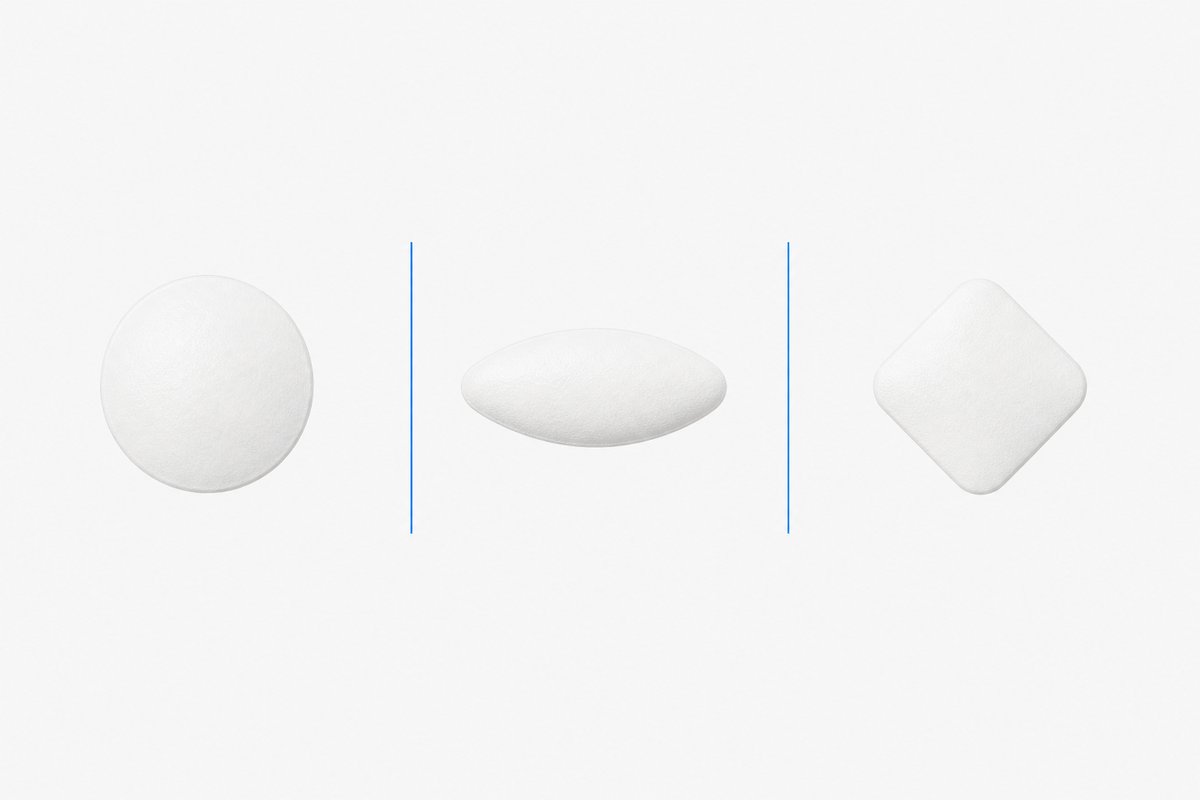
Straight answer please: which of the three is the most powerful?
Everything the three hold in common before anything divides them
The shared rules outnumber the differences, and they are the ones that hurt people when broken.
| Sildenafil | Tadalafil | Vardenafil | |
|---|---|---|---|
| Tablet strengths | 25, 50, 100 mg | 2.5, 5, 10, 20 mg | 2.5, 5, 10, 20 mg |
| Usual starting dose | 50 mg as needed | 10 mg as needed, or 2.5 to 5 mg daily | 10 mg as needed |
| Time to peak | Median 60 min, range 30 to 120 | Median 2 h, range 30 min to 6 h | Median 60 min, range 30 to 120 |
| Terminal half-life | About 4 hours | 17.5 hours | 4 to 5 hours |
| Meal instruction | High-fat meal cuts peak 29 percent | No restriction | With or without food |
| Nitrate interval in an emergency | 24 hours | 48 hours | 24 hours |
| QT statement in the label | None | None | Avoid with class IA and class III |
All three block phosphodiesterase type 5, none of them generates arousal, and every one is contraindicated alongside organic nitrates in any presentation: isosorbide tablets, glyceryl trinitrate spray or patch, and the amyl and butyl nitrites sold as poppers. Riociguat is barred on the same reasoning. Each is limited to one dose in 24 hours. Each was licensed on placebo-controlled studies in which somewhere around six or seven men in ten got a usable result, which also means each leaves roughly a third of men without one.
Brand availability stopped tracking that years ago. Levitra was withdrawn from the United States and generic vardenafil stayed on the shelf, sildenafil and tadalafil went generic earlier still, and supply and price now move more prescriptions than pharmacology does.
What survives all of that is a short list. Duration. One meal rule. The maximum dose and waiting period imposed by a strong CYP3A4 inhibitor. And a QT paragraph that appears in one label out of three.
A man reading three manufacturer pages comes away believing he is picking between three grades of one product. He is picking between three timing profiles.
Blue vision and back ache come from two different enzymes
The side-effect lists diverge for a reason that is written into the selectivity data.
Selectivity for PDE5 over PDE6, the isoenzyme confined to the retina, is roughly 10-fold for sildenafil, 15-fold for vardenafil and 700-fold for tadalafil. Reported rates follow that ordering exactly: visual symptoms, usually a blue tinge or light sensitivity, in 3 to 11 percent of men on sildenafil 25 to 100 mg, 0.3 to 2 percent on vardenafil and around 0.1 percent on tadalafil. Mild, dose-dependent, fully reversible.
Tadalafil inhibits PDE11, which sits in skeletal muscle among other tissues. Back pain and myalgia at 10 and 20 mg are the visible consequence, typically arriving 12 to 24 hours after the dose and clearing within 48 without treatment. Men attribute it to lifting something, every time.
The shared adverse effects are the vasodilator ones and they scale with dose on all three: headache, flushing, dyspepsia, nasal congestion. Sudden vision loss from non-arteritic ischaemic optic neuropathy and sudden hearing loss are rare class events printed in all three labels, and both mean stopping the tablet and getting seen.
This is the one place where side effects genuinely choose the molecule. Colour disturbance on sildenafil argues for tadalafil, back ache on tadalafil argues for either of the others, and the mechanisms do not overlap. Headache is no help, since all three cause it.
The heart-rhythm paragraph appears in exactly one of these labels
The warning is real, the effect is small, and the two facts are not in conflict.
Vardenafil carries it. In a postmarketing study of 44 volunteers, a single 10 mg dose produced a placebo-subtracted mean QTcF change of 5 msec, 90 percent confidence interval 2 to 8. Gatifloxacin 400 mg alone gave 4 msec. Given together the effect was additive at 9 msec, interval 6 to 11. The label turns that into a plain instruction: avoid the drug in congenital QT prolongation and in men on class IA agents such as quinidine or procainamide, or class III agents such as amiodarone or sotalol.
The sildenafil and tadalafil labels contain no equivalent statement, which is not the same as an absence of effect. The definitive repolarisation study in 58 healthy middle-aged men measured both: an hour after dosing, sildenafil 50 mg gave a placebo-corrected QTcF change of 6 msec and vardenafil 10 mg gave 8, with moxifloxacin 400 mg as the positive control also at 8. Neither raised absolute QT, the dose-response curve stayed shallow at supratherapeutic doses, and the investigators called the changes clinically irrelevant.
Five milliseconds by itself is noise.
It stops being noise on a medicine list already carrying a QT-prolonging antipsychotic, a macrolide and a potassium of 3.2. That decision gets made off the medicine list before erections are discussed, and two alternatives sit in the same pharmacy with nothing to say on the subject. Full numbers in the vardenafil briefing.
The head-to-head trial nobody has run, and what men decide on instead
The ranking men are looking for has never been measured, and the studies that look like a ranking are not one.
No adequately powered study has compared these three against each other for efficacy. The registration programmes each ran against placebo, in different populations, across different years, using endpoint definitions that were not written to be compared. Putting 56 percent from one trial next to 64 percent from another compares two protocols.
Baseline severity alone breaks the arithmetic. The North American vardenafil studies enrolled men with a mean erectile function domain score of 11.8 out of 30, which is moderate to severe disease, and a trial recruiting milder men reports higher success on any drug in the class.
What does exist is a set of open-label preference studies, most of them run by manufacturers, in which men tried two agents and chose one. Those mostly favoured tadalafil, close to seven men in ten, and the reason given was almost always the length of the window rather than the firmness of the result. Preference is a legitimate endpoint for a drug taken before sex, and unblinded sponsor-run comparisons remain the weakest design in the file.
So anyone presenting one of these as the strongest is quoting advertising.
Nitrates close all three; alpha-blockers are handled three ways
One rule is identical across the class. The rule sitting next to it is different in every label.
The nitrate contraindication is absolute across the class and needs re-asking whenever a cardiac list changes. Where the labels differ is the emergency interval afterwards: sildenafil and vardenafil use 24 hours, tadalafil 48. That 48 came from a dedicated study giving sublingual nitroglycerin at 2, 4, 8, 24, 48, 72 and 96 hours after the last dose, which found the interaction present at 24 and gone by 48.
Alpha-blockers are where the three diverge, and it matters most in men being treated for an enlarged prostate. Sildenafil starts at 25 mg in a man already stable on one. Vardenafil starts at 5 mg, or 2.5 mg with a CYP3A4 inhibitor in play. Tadalafil once daily plus an alpha-blocker is not recommended as a combination for prostate symptoms, though tadalafil alone holds that licence, and the wording regularly gets read as barring the drug in prostatic hyperplasia.
Two conditions apply whichever agent is used: the man has to be stable on the alpha-blocker first, and any later increase in the alpha-blocker dose can drop pressure further while a PDE5 inhibitor is on board. Alcohol potentiates the same effect across all three, and the men who run into that are not the ones having a glass of wine with dinner.
Milligrams are not a common currency across these three
The strengths look interchangeable on a screen and behave nothing like it in a patient.
The three ranges do not convert. Sildenafil is 25, 50 and 100 mg, opening at 50. Tadalafil is 2.5, 5, 10 and 20 mg, starting at 10 as needed or 2.5 to 5 mg once daily. Vardenafil comes as 2.5, 5, 10 and 20 mg, starting at 10 and dropping to 5 mg for men aged 65 and over, whose exposure runs about half as high again.
As a rough anchor when moving between agents, 50 mg of sildenafil sits near 10 mg of tadalafil and 10 mg of vardenafil. No label prints that equivalence.
Where the useful gain lives matters more than where the ceiling is. In the vardenafil trials at three months, the per-patient rate of maintaining an erection through intercourse was 51 percent on 5 mg, 64 percent on 10 mg and 65 percent on 20 mg, against 32 percent on placebo. Thirteen points between the first two strengths, one point between the last two. Tadalafil at 24 hours reads 42, 56 and 67 percent, so its top strength is worth more.
The order matters. Titrate inside the molecule you started with before concluding that the molecule is the problem.
Half-life is where these molecules genuinely part company
Seventeen and a half hours against four. Everything downstream of that number follows from it.
Tadalafil has a terminal half-life of 17.5 hours. Sildenafil runs about 4 hours, vardenafil 4 to 5 for the parent drug and its M1 metabolite. That single row does more work than every other difference combined.
It explains why tadalafil is the only one sold as a low daily tablet, the only one licensed for benign prostatic hyperplasia at 5 mg a day, and the source of the 36-hour figure: fixed-timepoint trials that assigned men an hour and told them to try then. It also explains sildenafil's licensed window of 30 minutes to 4 hours.
Peak timing separates them far less. Sildenafil and vardenafil both peak at a median of 60 minutes fasted with the same 30 to 120 minute spread, while tadalafil peaks at a median of 2 hours and individual men peaked anywhere from 30 minutes to 6.
This is the one difference a man reliably feels, and it is a question about his week rather than his physiology. A short-acting tablet gives a window with a recognisable beginning and end. A long-acting one removes the need to see the evening coming, at the cost of being measurably present the following day. Both trades are covered properly in the tadalafil scheduling briefing and the sildenafil timing briefing.
Dinner produces a different answer for each of the three
One label documents a meal effect and quantifies it, one documents it and permits it anyway, one is silent.
Sildenafil is the one with a number attached. After a high-fat meal, mean time to peak is delayed 60 minutes and mean peak concentration falls 29 percent. The patient section of that label names a cheeseburger and fries as the example, which is a more useful test than any percentage.
Tadalafil has no meal instruction at all. Food does not change the extent of absorption and the label says the tablets may be taken without regard to it.
Vardenafil sits awkwardly between them. Its label permits dosing with or without food, while the food-effect work put the fall in peak concentration between 18 and 50 percent, a spread wide enough that the two studies effectively disagreed.
The practical failure is identical on both short-acting drugs. Heavy restaurant meal, tablet taken with the dessert, attempt forty minutes later. That collects the delayed peak and the early attempt at once and gets reported the next week as the drug not working. Taking the tablet before the meal rather than after it fixes most of those evenings without anyone eating differently.
One azole on the prescription list generates three separate answers
Same enzyme, same inhibitors, three completely different sets of numbers in the dosing sections.
What a strong CYP3A4 inhibitor does to each of the three
- Sildenafil with ritonavir: no more than a single 25 mg dose in 48 hours. With ketoconazole, itraconazole, saquinavir or erythromycin, consider starting at 25 mg.
- Tadalafil as needed with a potent inhibitor: no more than 10 mg once every 72 hours. On the once-daily regimen the ceiling drops to 2.5 mg.
- Vardenafil with ritonavir or cobicistat: no more than 2.5 mg in 72 hours.
- Vardenafil with indinavir, saquinavir, atazanavir, clarithromycin, ketoconazole 400 mg or itraconazole 400 mg daily: no more than 2.5 mg in 24 hours.
- Vardenafil with ketoconazole 200 mg, itraconazole 200 mg or erythromycin: no more than 5 mg in 24 hours.
All three are cleared largely by CYP3A4, so the interaction is a class effect. The instructions written around it are not, and the gaps between them decide which drug a man can realistically use.
The interval is the part that disappears in conversation. A tablet chosen for spontaneity arrives with a three-day gap attached once ritonavir is on the list, which turns it back into a planned medicine. Anybody on a protease inhibitor, cobicistat or a 400 mg azole should be shown the interval rather than the milligram figure.
Induction runs the other way and gets ignored. Rifampin substantially lowers exposure across the class and no label offers an upward adjustment to compensate, so a man on rifampicin reporting that nothing happened has not necessarily failed these drugs. Men have been moved on to injections over exactly that confusion.
Moving to the second molecule, and the checks that come before it
Switching is reasonable and often works. It is also the step most often taken too early.
Before the first tablet
Nitrates and riociguat excluded, whole medicine list seen, exercise tolerance asked about.
Attempts one to three
One molecule, labelled starting dose, correct interval, no heavy meal on the short-acting agents.
Dose step
Highest strength tolerated inside the same molecule, before anybody proposes a different drug.
Four to six fair attempts
Where non-response can honestly be declared for that agent.
Switch within the class
Second molecule at its own starting dose, no washout, never overlapping the first.
Three fair failures
Back to assessment, then referral for injection, device or surgical options.
A drug in this class has not failed until it has been taken at the highest tolerated dose, at the right interval, with arousal present, four to six times. Anything short of that is untested rather than failed.
Re-education alone recovers a large share of apparent non-responders. In a urology series of 236 men referred from primary care as sildenafil failures, 41.5 percent responded once use was corrected and follow-up arranged, and none of them needed a dose below 50 mg: 31 percent responded at 50 mg and 69 percent at 100.
For men who fail properly, 30 to 50 percent respond to a second agent in the class, which is why guidelines put a switch ahead of injections or devices. No washout is needed between agents; the next tablet simply goes in at the next planned occasion. Two of them are never taken together, at any strengths, and no label supports the combination.
Three fair failures across two molecules goes back to assessment rather than forward to a third brand: glucose, morning testosterone if it has never been measured, the medicine list again, and referral for the non-oral options. That order of work is set out in why erections fail.
One registry finding deserves more attention than any comparison table. Somewhere between 30 and 40 percent of men stop their first drug in this class inside twelve months, most without telling the prescriber, so the review appointment decides whether any of this mattered.
Last Updated

Mailbag
What readers asked
Answered by Dr. Marc Vidal, MD · Internal medicine and clinical pharmacology
The comparison post brings in more questions than any other page here, and nearly all of them are versions of the same one. What follows is general education, answered as the question was written rather than as a recommendation for anybody.
The straight answer is that nobody knows, and that is a fact about the evidence rather than a hedge. No adequately powered trial has compared these three head to head for efficacy. Each was licensed against placebo, in different populations, in different years, with endpoints that were never written to be lined up. The vardenafil studies alone enrolled men with a mean erectile function domain score of 11.8 out of 30, which is moderate to severe disease, so their percentages start from a lower floor than a trial recruiting milder men. What does exist is preference work, mostly unblinded and mostly run by manufacturers, in which roughly seven men in ten chose tadalafil and gave duration as the reason. That is a statement about convenience. If you want a genuinely useful question to bring to a prescriber, ask which timing profile fits your month.
My husband gets a blue tinge to his vision on sildenafil. Is that dangerous, and would another tablet avoid it?
It is almost certainly harmless and there is a rational way to avoid it. The colour change comes from inhibition of PDE6, an enzyme confined to the retina, and selectivity for PDE5 over PDE6 is only about 10-fold for sildenafil against roughly 700-fold for tadalafil. That difference shows up in the reported rates: 3 to 11 percent of men on sildenafil 25 to 100 mg report visual symptoms against around 0.1 percent on tadalafil. The symptoms are dose-dependent and fully reversible, so dropping from 100 mg to 50 is one option and switching molecules is another. The important separation is between a blue tinge or light sensitivity, which is the nuisance I have described, and sudden loss of vision in one eye, which is a rare class event, needs the tablet stopped immediately and needs same-day attention.
Can I take sildenafil on Saturday and tadalafil on Sunday if the first one does not do much?
No, and the reason is that Sunday would not be a fresh start. Tadalafil has a terminal half-life of 17.5 hours, so a Saturday tadalafil dose is measurably present into Monday, and sildenafil overlapping the tail of it means two drugs acting on the same pathway with no study behind the combination and no label permitting it. What you are describing is also a misreading of a poor result. One disappointing evening is not a failed drug. Four to six honest attempts at the highest tolerated dose, taken at the right interval with arousal present and without a heavy meal beforehand, is what it takes before non-response means anything. If you get there and it still is not working, switching is reasonable and no washout is needed. One at a time.
My partner takes amiodarone. His GP said no to Levitra but offered something else. Is that inconsistent?
It is consistent, and the vardenafil label is the reason. Vardenafil is the only one of the three with a QT paragraph in it. A single 10 mg dose produced a placebo-subtracted mean QTcF change of 5 msec, and given alongside a quinolone the effect was additive at 9 msec. Amiodarone is a class III antiarrhythmic, and the label states plainly that men on class IA or class III agents should avoid the drug. Neither the sildenafil nor the tadalafil label carries an equivalent statement. That does not make them QT-neutral, since the definitive repolarisation study measured 6 msec for sildenafil 50 mg, but it does mean the regulator saw no reason to restrict them on that basis. Offering an alternative in the same class is the standard move here, not a compromise.
I am on ritonavir. Somebody told me all the ED drugs are basically off limits. True?
Not off limits, but rewritten, and each one is rewritten differently. Sildenafil with ritonavir is capped at a single dose of no more than 25 mg in any 48-hour period. Tadalafil taken as needed is capped at 10 mg no more than once every 72 hours, and if you were on the daily regimen the ceiling would be 2.5 mg. Vardenafil with ritonavir or cobicistat is capped at 2.5 mg per 72 hours. Read the intervals rather than the milligrams, because that is the part that changes your life: a drug you chose for spontaneity now needs three days of notice. None of that is a reason to go without treatment. It is a reason to pick the agent around the interaction instead of picking it first and discovering the interaction afterwards. Bring the whole list, since azoles and clarithromycin sit in the same category.
Does it make sense to buy the 20 mg tablets and split them to save money?
Sometimes, and it depends entirely on which molecule and which tablet. All three of these come in film-coated tablets that are not universally scored, and an unscored film-coated tablet does not split into two equal halves reliably, so you can end up alternating between too much and too little without knowing which evening was which. Ask the pharmacist about the specific product rather than the drug. The other half of the answer is that splitting only helps if the dose you want is genuinely half. If you are on 10 mg of vardenafil, the trial data says the step from 5 to 10 mg is worth thirteen percentage points and the step from 10 to 20 is worth one, so a split 20 is not a clever route to a good 10. Orally disintegrating tablets must never be split or halved.
I get bad headaches on all of them. Is there one that causes fewer?
Headache is the least discriminating side effect in this class, so switching for that reason alone usually disappoints. It comes from vasodilation, which is the mechanism itself, and it appears in the common adverse reactions of all three labels along with flushing, dyspepsia and nasal congestion. It is also dose-related, which gives you a better lever than a brand change: dropping sildenafil from 100 mg to 50, or tadalafil from 20 to 10, often keeps enough of the effect while making the evening tolerable. Some men do better on a lower daily tadalafil dose than on a large intermittent one, because the peak is flatter. Worth raising if headaches are the thing stopping you using the prescription. Severe headache with visual change or neck stiffness is a different matter and needs assessment rather than a dose adjustment.
How long should he give one tablet before deciding it does not work for him?
Four to six proper attempts at the highest dose he tolerates, and the word doing the work in that sentence is proper. The gap between taking the tablet and trying has to be right for the molecule, which is about an hour on sildenafil or vardenafil and looser on tadalafil. Arousal and physical stimulation have to be part of it, because none of these drugs generates desire. A heavy meal before a short-acting tablet has to be off the table. In one urology series of 236 men referred as sildenafil failures, 41.5 percent turned into responders once use was corrected and follow-up was arranged, and none of them needed a dose below 50 mg. That is a large share of apparent failures that were never drug failures at all. If it is still not working after that, switching is reasonable and about a third to a half of genuine non-responders do respond to a second agent.
Levitra seems to have vanished from the pharmacies here. Was it withdrawn for safety reasons?
The brand was withdrawn from the United States market, and it was a commercial decision rather than a safety one. Generic vardenafil is still made and still dispensed, so the molecule and its label are unchanged, including the QT paragraph and the 2.5 to 20 mg range. What actually happened is that sildenafil and tadalafil went generic, prices collapsed, and a third short-acting brand with no daily option and no prostate indication had nothing left to sell. If vardenafil has been working for you, there is no clinical reason to move. If you are choosing for the first time, the practical questions are supply at your pharmacy, price, and whether your medicine list contains anything that prolongs the QT interval.
Read each reply as a general teaching point, not a plan built for the person who asked. Your own situation - notes, bloods, every medicine you take - belongs in front of a prescriber who can weigh all of it together.